Most people don't learn about fascia until they experience unexplained chronic pain, their baby can't latch, their child can't sleep, or a tension pattern keeps coming back no matter how much stretching, strengthening, or chiropractic care they do. Fascia isn't a buzzword or a fad in the wellness world- it's one of the most interconnected, sensory-rich systems in the body, and yet it has been largely ignored in traditional rehab and medicine.
Fascial therapy is the practice of assessing and releasing tension so the body can move, regulate, and heal the way it is designed to. When you understand fascia, challenges that once felt confusing and unrelated suddenly start to make sense. Feeding difficulties, reflux, chronic neck pain, headaches, TMJ, sleep struggles, anxiety, and developmental delays might seem like different issues on the surface, but fascia reveals how nothing in the body functions in isolation.
The Fascial System: More Than Connective Tissue
Fascia is often described as "connective tissue," but that barely scratches the surface. Fascia is a continuous network that wraps and weaves through the entire body- around muscles, bones, nerves, organs, and even down to the cellular level. It gives us structure, allows different layers to glide, and transmits force and tension throughout the body.
If you've ever cooked chicken and noticed that thin, web-like layer beneath the skin- that's fascia. Now imagine an entire three-dimensional fabric that never stops and never disconnects. This is why tension in one area can create effects somewhere else, even years later.
Research has shown that fascia is incredibly sensory- it's full of mechanoreceptors, proprioceptors, and interoceptive fibers that help the body orient itself, coordinate movement, sense internal states, and regulate the nervous system. It responds not only to physical forces like compression and strain, but also to stress, emotion, and truama. It remembers.
Fascia and the Nervous System: Two Systems That Speak the Same Language
One of the things I find most fascinating in my work is how fascia and the nervous system are constantly communicating. They are not separate compartments; they're deeply intertwined. When the nervous system is overwhelmed, protective, dysregulated, or stuck in a stress response, fascia tightens and guards. When fascia is restricted, compressed, or unable to move, the nervous system becomes more sensitive, vigilant, and reactive.
This is one reason why chronic tension patterns and unresolved pain often have both physical and emotional layers. The body isn't malfunctioning- it's communicating. It's protecting. Sometimes it's holding onto a story the mind wasn't ready to process yet.
In newborns and children, the nervous system and fascia are shaping development moment by moment. Regulation, co-regulation, motor skills, sensory processing, feeding, and sleep are not just brain-based- they're body based.
Pediatrics: Signs of Fascial Tension in Babies and Children
In babies and children, fascial tension often shows up long before a diagnosis ever could. The birth process itself- whether vaginal, assisted, or cesarean- involves compression, rotation, and torque on tiny bodies whose fascial systems are still extremely fluid and responsive.
Common signs of fascial tension in infants may include:
- difficulty latching or maintaining suction
- popping on or off the breast
- reflux, gassiness, or constipation
- colic or persistent fussiness
- arching or stiffening
- torticollis or head preference
- mild asymmetry
- shallow mouth breathing
- sleep difficulties
In toddlers and older children, tension patterns can express through:
- sensory-seeking or sensory-avoidant behaviors
- mouth breathing
- speech challenges
- poor sleep quality
- emotional reactivity
- motor delays or awkward coordination
- headaches or growing pains
- picky eating
- constipation
- ADD/ADHD
- growing pains
None of these symptoms are "diagnoses" in themselves- they're signals. Fascia gives context to why these patterns show up and why they often cluster together.
Adults: Chronic Tension, Pain, and Autonomic Load
Adults often come to fascial therapy after they've tried everything else. They've stretched, strengthened, massaged, and foam-rolled only to feel their body pull right back into the same patterns. Chronic pain, jaw tension, headaches, TMJ, poor sleep, and postural fatigue are common reasons people seek sessions.
But beneath physical tension, I see nervous systems that are tired- systems that have spent years holding their breath, bracing, or compensating. Many of the adults I treat also carry emotional tension, trauma, or stress physiology that the body learned to manage through contraction. Fascial therapy provides a way for the body to unwind and reorganize on ints own terms, without forcing or overriding.
Fascia, Oral Function, and Airway: The Missing Connection
One of the most overlooked intersections in healthcare is between fascia, oral function, and airway. The tongue is not just a muscle- it's part of a fascial and neurological system that influences feeding, swallowing, speech, breathing, palate development, and sleep. This is why fascial therapy pairs so beautifully with myofunctional therapy, lactation support, airway dentists, ENTs, and speech therapy.
When you address tethered oral tissue, mouth breathing, or sleep disordered breathing without considering the fascial system, you often treat the symptom but not the root.
What Fascial Therapy Looks Like in Practice:
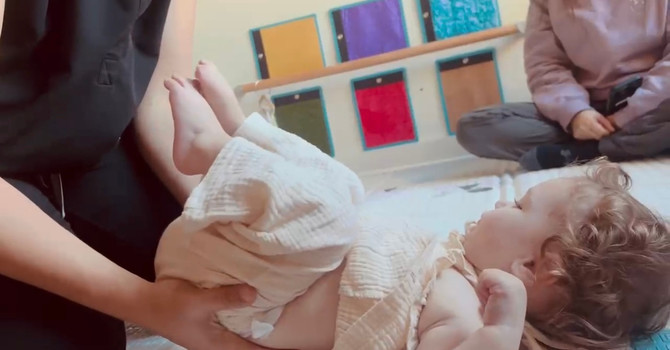
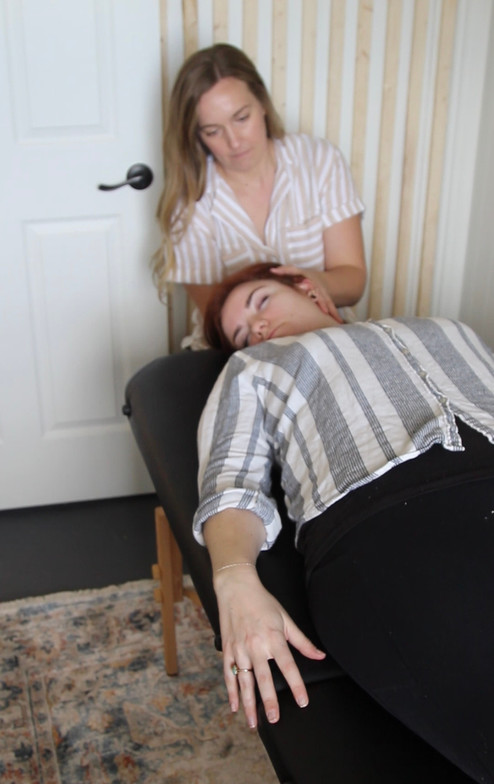
Unlike traditional PT or massage, fascial work is not about forcing tissue or mechanically "breaking up" adhesions. It's gentle, responsive, and highly individualized. Sessions often involve a combination of hands-on assessment, movement-based unwinding, and supporting the nervous system as it integrates change.
Babies may stretch, yawn, twist, kick, or soften into stillness. Older children often become playful, curious, or relaxed. Adults may experience warmth, sensation, emotional release, or a deep sense of relief as the body lets go of what it has been holding.
The body already knows how to heal, sometimes it just needs an invitation.
How Fascial Therapy Fits Into the Bigger Picture
One of the things I love most about this work is how well it integrates with other disciplines. Fascial Therapy doesn't just replace chiropractic, lactation, airway dentistry, PT/OT, or mental health care- it enriches them. When the body is more open, regulated, and connected, other interventions tend to work better and last longer.
I collaborate frequently with:
- Airway Dentists & Myofunctional Therapists
- Lactation Consultants and IBCLCs
- Chiropractors & Bodyworkers
- Pediatric and adult PT/OTs
- Doulas & Midwives
- Mental Health Practioners
Healthcare ism't meant to be siloed. The body isn't.
The Future of Fascial Care
I believe we're entering a new era of healthcare- one that understands that structure, function, emotion, and development are not separate categories but one continuous story. As more providers and parents become aware of the fascial system, collaborative care is becoming not only possible but necessary.
My hope is that this work becomes more accessible, more understood, and more interdisciplinary. The body was not designed to fragment- it was designed to communicate.
Interested in Learning More or Working Together?
If you're a parent, adult, or provider and want to learn more about fascial therapy, I'd love to connect. I offer hands-on sessions, virtual consults, workshops, and educational resources for families and professionals. You can explore my services on my website or follow along on Instagram for education, case stories, workshops, and favorites.

Dr. Alyssa Welch, PT, DPT
Contact Me