I recently had the opportunity to join The Untethered Podcast with Hallie Bulkin for a conversation focused on why feeding therapy and oral function must be viewed through a whole-body lens.
Through years of clinical work, it has become increasingly clear to me that nothing in the body functions in isolation, especially the tongue. Oral function is deeply influenced by posture, breathing patterns, fascial tension, and nervous system regulation. When we focus only on the mouth without considering the rest of the body, we often miss key contributors that impact feeding, airway function, and regulation.
This systems-based understanding is what ultimately guided my growing interest in Myofunctional Therapy. The tongue does not operate independently. It is connected to the airway, cervical spine, diaphragm, and overall postural system. Tongue posture and mobility influence breathing mechanics, autonomic regulation, and even how safely and efficiently a child is able to feed.
During this episode, Hallie shared observations from her own work, noting how feeding often improves when tension is released throughout the body, and how regression can occur when restriction returns. This pattern is something I see consistently across ages, particularly in babies and young children.
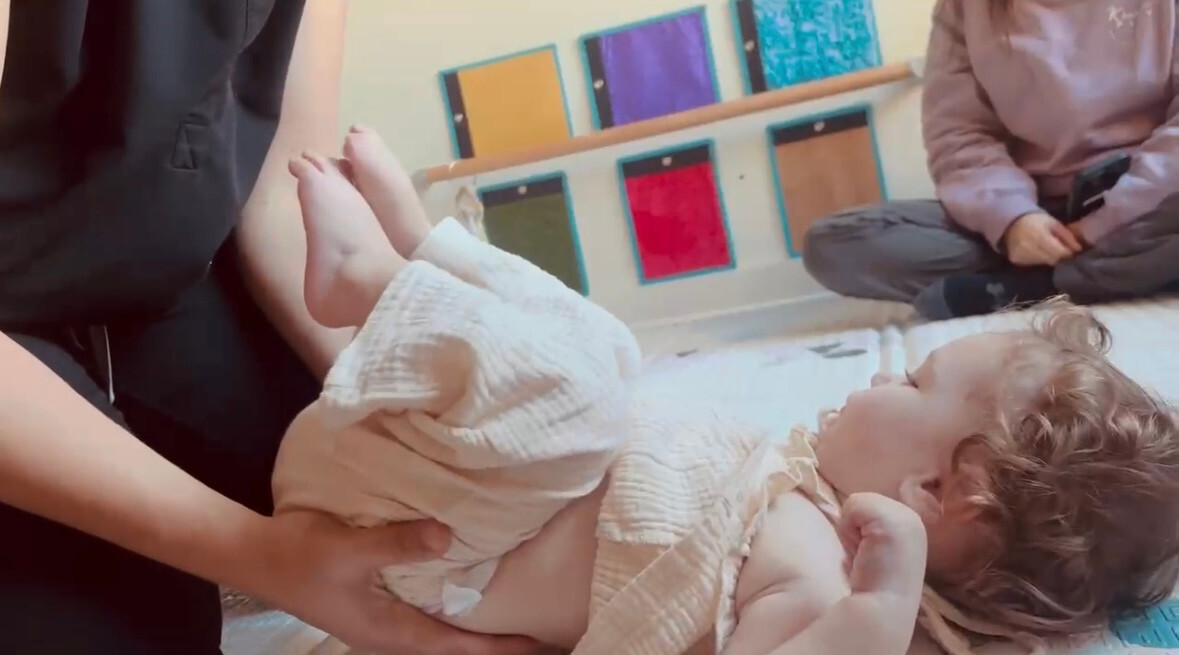
One clinical experience we discussed involved a one-year-old with a feeding tube who participated in a 2-day Fascial Unwinding intensive. Rather than focusing soley on oral structures, we addressed full-body tension. Following the intensive, her mother sent me videos showing improved tongue control, the emergence of sucking, and her ability to eat her first baby wafer and jar of pureed food. Releasing global tension allowed function to emerge.
We also talked extensively about nervous system regulation and the role of co-regulation. During this intensive, I worked not only with baby, but with other family members as well- particularly mom. I truly felt as though once mom's nervous system began to shift, we saw the most significant changes in her baby. Children are highly sensitive to the nervous systems around them, and feeding is inseperable from a sense of safety and regulation.
As the conversation expanded, we discussed how both physical and emotional experiences are stored in the body over time, often beginning before birth. Many individuals (adults especially) are living in chronic fight-or-flight without realizing it. This underlying stress can influence breathing, posture, digestion, sleep, and oral function in subtle but meaningful ways.
We also addressed the skepticism that still exists around myofunctional and fascial-based therapies. While these approaches may not always be considered mainstream, their impact cannot be easily dismissed. Evidence continues to grow, and clinical outcomes often speak for themselves.
A central theme of this episode was the importance of interdisciplinary collaboration. Dentists, IBCLCs, Speech-Language Pathologists, Occupational Therapists, Chiropractors, and Physical Therapists all play vital roles. Having a shared understanding of the role of fascia and the nervous system creates more cohesive care and sustainable outcomes.
This conversation reflects the core philosophy behind my work: supporting function by addressing the body as a whole, recognizing the tongue as part of an integrated system, and collaborating across disciplines to best support families.

Dr. Alyssa Welch, PT, DPT
Contact Me